
Lesson Plan Description
Water Quality Assessments Using Ceriodaphnia Dubia
Students will be engaged in hands-on activities to culture C. dubia and set-up an experiment to answer a comparative question regarding reproduction under various environmental conditions. Finally, the project will link IBL with the biology involved in evolution and how species adapt. More questions will emerge to continue scientific investigations and further the learning process.
Grade Level
7-9
Time Requirement
Day one – 40 minutes/ full class period
Each day- take 10 minutes to feed and count the water fleas
Final day – 40 minutes/ full class period
Download lesson plan
Practical Application
This experiment allows students to understand toxicity levels in their own water samples, using techniques that would be used in a real lab setting. Each student will have practice with the scientific process, including interpreting and documenting data.
Objectives
- Incorporate the process of inquiry-based learning into a traditional direct instruction classroom setting.
- Assess the toxicity of various surface waters from different environmental settings.
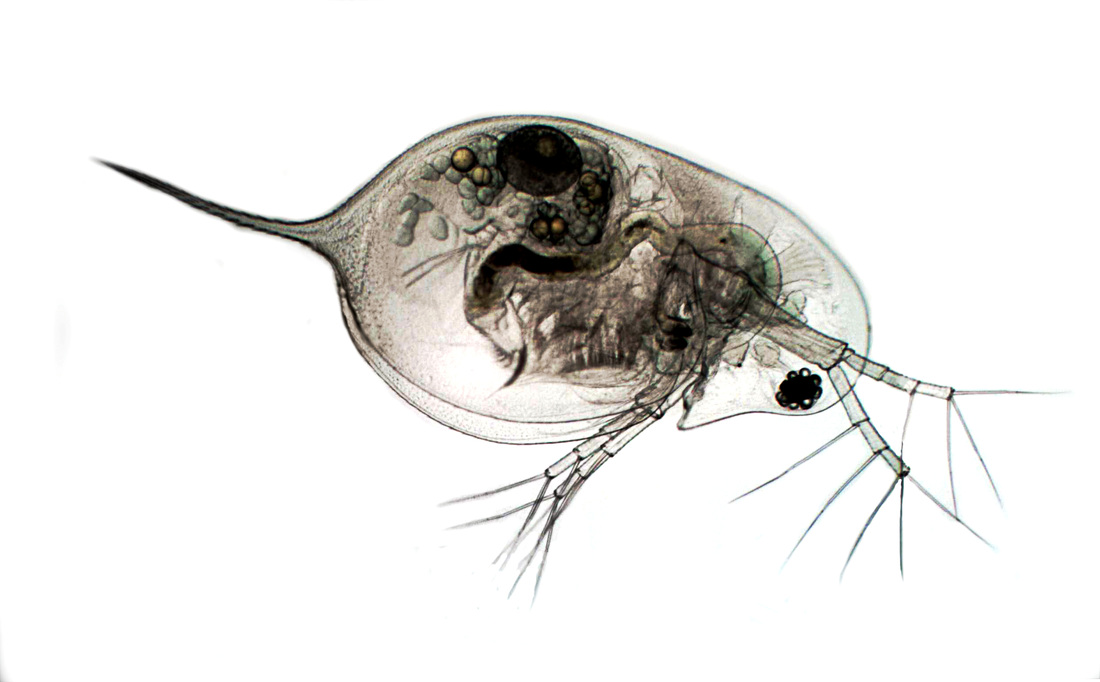
- Students will be able to identify the life cycle, morphology, and habitat of C. dubia .
- Students will recognize ways that species, specifically C. dubia ., adapt to their environment.
- Differences in adaptation will lead to a comparative question that the teacher will provide to the class.
- Students will work together in groups to maintain stock cultures of C. dubia and complete an action plan to explore various adaptations to different environments.
- Students will collect, tabulate and present scientific data as well as journal their process.
- Students will uncover additional questions and think critically about the data found.
Educational Standards
Scientific inquiry – Students develop scientific habits of mind as they use the processes of scientific inquiry to ask valid questions, and to gather and analyze information. They understand how to develop hypotheses and make predictions. They can reflect on scientific practices as they develop plans of action to create and evaluate a variety of conclusions. Students are also able to demonstrate the ability to communicate their findings to others. Life Science (Topic: Species and Reproduction)
8.LS.1 Diversity of species, a result of variation of traits, occurs through the process of evolution and extinction over many generations. The fossil records provide evidence that changes have occurred in number and types of species.
8.LS.2 Every organism alive today comes from a long line of ancestors who reproduced successfully every generation.
8.LS.3 The characteristics of an organism are a result of inherited traits received from parent(s).