
Lesson Plan Description
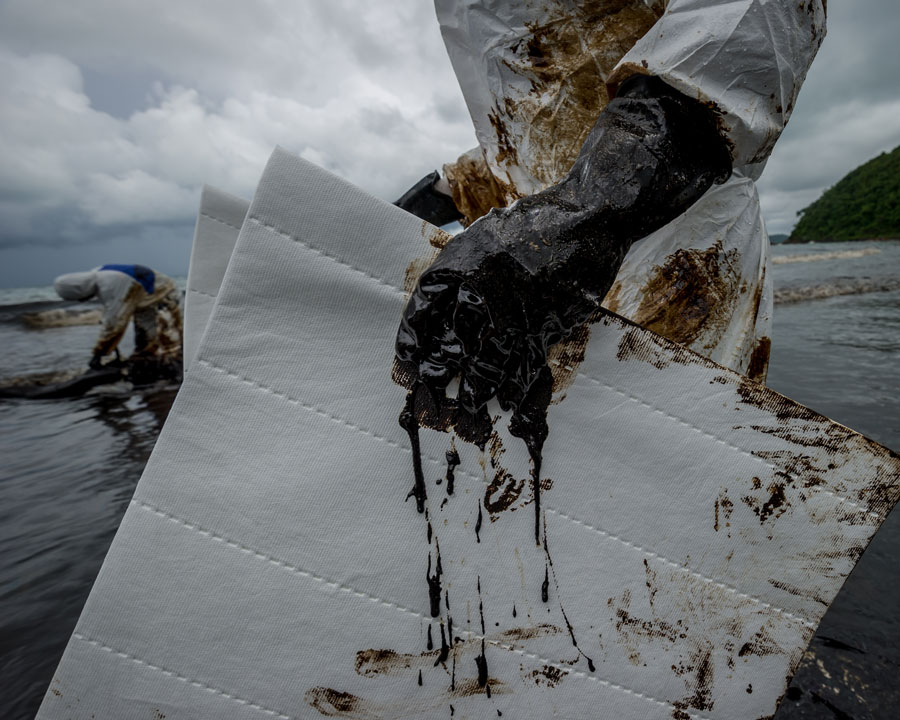
Discover the negative effects oil spills have on the ecosystem
Students discover some of the challenges that occur when cleaning up an oil spill. They will analyze their findings and present to the class. The project will link IBL with traditional teaching by giving teachers options to best suit the class needs. More questions will emerge to continue scientific investigations and further the learning process.
Grade Level
2-5
Time Requirement
3 days, approximately 30 minutes each day
Download lesson plan
Practical Application
This experiment allows students to understand the importance of taking precautions to prevent oil spills. Each student will have practice with the scientific process, including documenting and interpreting data.
Objectives
- Incorporate the process of inquiry-based learning into a traditional direct instruction classroom setting.
- Students will be able to use multiple means to find answers to their questions, including but not limited to participating in the inquiry experience, reading information from primary and secondary sources, watching videos, and talking with more knowledgeable individuals in their community.
- Students will be able to identify ways humans use oil to sustain their way of life.
- Students will be able to identify problems that occur after an oil spill.
- Students will be able to collect data answering their comparative questions.
- Students will be able to present scientific data as well as journal their process.
- Students will be able to uncover additional questions and think critically about the data found.
Educational Standards
Scientific Inquiry, Practices and Applications
-
Apply knowledge of science content to real-world challenges.
-
Plan and conduct simple scientific investigations using appropriate safety techniques based on explorations, observations and questions.
-
Employ simple equipment and tools to gather data and extend the senses.
-
Use data and mathematical thinking to construct reasonable explanations.
-
Communicate with others about investigations and data.
-
The world is discovered through exploration.
-
Exploration leads to observation. Observation leads to questions.
2.LS.1: Living things cause changes on Earth.
3.ESS.1: Earth’s nonliving resources have specific properties.
3.ESS. 2: Earth’s resources can be used for energy.
4.LS.1: Changes in an organism’s environment are sometimes beneficial to its survival and sometimes harmful.
5.LS.1: Organisms perform a variety of roles in an ecosystem.